Buy einlassbänder.eu ?
We are moving the project
einlassbänder.eu .
Are you interested in purchasing the domain
einlassbänder.eu ?
domain@kv-gmbh.de · 0541-91531010
Buy einlassbänder.eu ?
'Will + participle 2?'
"Will + participle 2" is a construction used to form the future perfect tense in English. It is used to indicate an action that will be completed before a specific point in the future. This construction is formed by using the auxiliary verb "will" followed by the past participle of the main verb. For example, "By the time you arrive, I will have finished my homework." **
What are the Latin forms of the present participle, perfect passive participle, and future active participle?
The Latin present participle is formed by adding -ns, -ntis to the present stem of the verb. For example, the present participle of the verb "amo" (I love) is "amans, amantis" (loving). The perfect passive participle is formed by adding -us, -a, -um to the verb stem. For example, the perfect passive participle of the verb "amo" is "amatus, amata, amatum" (loved). The future active participle is formed by adding -urus, -ura, -urum to the verb stem. For example, the future active participle of the verb "amo" is "amaturus, amatura, amaturum" (about to love). **


Similar search terms for Participle
Top-Angebote
Products related to Participle:
-
Fusion Finds Face Washing Wristbands Soft Microfiber Wristbands For Skincare, Makeup & Sports kKeep your sleeves dry and your skincare routine messfree with these ultrasoft spa wristbands. Designed for anyone who loves a clean, comfortable facewashing experience, these reusable wristbands absorb water before it runs down your arms. Made from...29,97 $*Shipping: 0,00 $Secure redirect to the provider
-
Fusion Finds Face Washing Wristbands Soft Microfiber Wristbands For Skincare, Makeup & Sports dKeep your sleeves dry and your skincare routine messfree with these ultrasoft spa wristbands. Designed for anyone who loves a clean, comfortable facewashing experience, these reusable wristbands absorb water before it runs down your arms. Made from...29,97 $*Shipping: 0,00 $Secure redirect to the provider
-
Fusion Finds Face Washing Wristbands Soft Microfiber Wristbands For Skincare, Makeup & Sports fKeep your sleeves dry and your skincare routine messfree with these ultrasoft spa wristbands. Designed for anyone who loves a clean, comfortable facewashing experience, these reusable wristbands absorb water before it runs down your arms. Made from...29,97 $*Shipping: 0,00 $Secure redirect to the provider
-
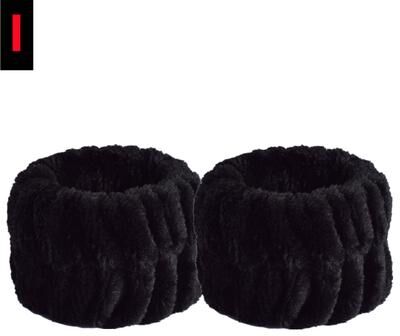
Fusion Finds Face Washing Wristbands Soft Microfiber Wristbands For Skincare, Makeup & Sports iKeep your sleeves dry and your skincare routine messfree with these ultrasoft spa wristbands. Designed for anyone who loves a clean, comfortable facewashing experience, these reusable wristbands absorb water before it runs down your arms. Made from...29,97 $*Shipping: 0,00 $Secure redirect to the provider



-
What are participle clauses?
Participle clauses are a type of clause that uses a present participle (-ing form) or a past participle (-ed form) to provide additional information about the subject of the main clause. They can be used to show simultaneous actions, cause and effect, or to provide descriptive details. For example, in the sentence "Feeling tired, she decided to go to bed," the participle clause "Feeling tired" provides additional information about the subject "she." **
-
What is a participle?
A participle is a form of a verb that can function as an adjective or be part of a verb phrase. There are two types of participles in English: the present participle, which ends in -ing (e.g. "walking"), and the past participle, which can end in -ed, -en, -d, -t, -n, or -ne (e.g. "broken"). Participles are used to modify nouns or pronouns, and they can also be used to form verb tenses such as the present perfect or past perfect. **
-
What is the difference between the past participle and the present participle?
The past participle is a verb form used to indicate a completed action or state that occurred in the past. It is often used with auxiliary verbs to form the perfect tenses (e.g., "has eaten," "had gone"). The present participle, on the other hand, is a verb form used to indicate an ongoing action or state in the present or future. It is formed by adding "-ing" to the base form of the verb and is used to create the progressive tenses (e.g., "is eating," "will be going"). **
-
How can the terms premature, simultaneous, and subsequent be explained in relation to past participle, present participle, and future participle?
The terms premature, simultaneous, and subsequent can be explained in relation to past participle, present participle, and future participle based on their timing in relation to the action of the verb. The past participle refers to an action that has already been completed, making it premature in relation to the present moment. The present participle refers to an action that is happening at the same time as something else, making it simultaneous. The future participle refers to an action that will happen at a later time, making it subsequent to the present moment. These terms help to clarify the timing of the action in relation to the verb. **


What is a nominalized participle?
A nominalized participle is a verb form that has been turned into a noun. This is done by adding a suffix to the participle form of the verb, which allows it to function as a noun in a sentence. Nominalized participles are commonly used in various languages to express actions or qualities in a more abstract or general way. **
What is a substantivized participle?
A substantivized participle is a verb form that has been turned into a noun by adding a definite article and declining it for case, gender, and number. In other words, it is a participle that has been transformed into a noun and can function as a subject, object, or complement in a sentence. This process allows the participle to take on the characteristics of a noun while still retaining some of its verbal qualities. **
Top-Angebote
Products related to Participle:
-
Microsoft Access (Windows)Microsoft Access for Windows – One-Time Purchase, Lifetime AccessMicrosoft Access is your complete database management and application-building solution — available now as a one-time purchase for Windows PCs.Create, manage, and share databases with ease using powerful built-in templates, advanced queries, and forms — perfect for businesses, educators, and advanced users who need to keep large amounts of data organized.With no subscriptions or recurring fees, you’ll enjoy full offline access to Microsoft’s proven database tools, tightly integrated with Excel, Outlook, and other Office applications.System requirements: Compatible with Windows 10 and newer operating systems. Supports both 32-bit and 64-bit architectures.Buy a Genuine Access License from a Certified Microsoft ResellerShop with confidence — PrimeLicense is a Microsoft Certified Partner, which means we’re officially authorized to sell, support, and provide services for Microsoft products. Plus, with an outstanding 4.9/5 rating on Trustpilot, Google, and Trusted Shops, you can count on us for genuine software and top-quality support.With your purchase, you’ll receive: An original lifetime license key for Office 2024 and Adobe Acrobat Clear installation and activation guides sent instantly via email Free expert support whenever you need help Please Note:This license is for the standalone Access application for Windows only.Need More Than Access? If you also need Word, Excel, PowerPoint, Outlook, or other Office apps, consider the full Office suite for Windows: Office 2024 Pro Plus Office 2021 Pro Plus Office 2019 Pro Plus Prefer a Cloud-Based Solution? Check out Microsoft 365 Personal — includes online access, real-time collaboration, automatic updates, and 1 TB of OneDrive cloud storage.Get Your Access Software in 3 Easy Steps Purchase Access from PrimeLicense — your license key and activation guide will arrive instantly via email. Download the official installation file from Microsoft using the secure link we provide. Activate with your key and start managing your databases right away. Important:Microsoft Access 2021 is designed for Windows PCs only.For Mac users who need database management solutions, we recommend using Microsoft Excel or the cloud-based Microsoft 365 app as an alternative.Secure Checkout & Buyer ProtectionYour order is protected with Trusted Shops Buyer Protection for up to €2,500. We also offer a 30-day money-back guarantee for added peace of mind.All payments are encrypted via SSL and processed securely through Stripe, Google Pay, and Apple Pay — keeping your personal information safe at every step.What You’ll Get with Microsoft AccessMicrosoft Access helps you efficiently create and manage databases with powerful tools: Database creation using templates or building from scratch with a user-friendly graphical interface Relational database support for organizing complex, linked data across multiple tables Data import and linking capabilities from Excel, SQL Server,...38,90 £*Shipping: 0,00 £Secure redirect to the provider
-
Fusion Finds Face Washing Wristbands Soft Microfiber Wristbands For Skincare, Makeup & Sports gKeep your sleeves dry and your skincare routine messfree with these ultrasoft spa wristbands. Designed for anyone who loves a clean, comfortable facewashing experience, these reusable wristbands absorb water before it runs down your arms. Made from...29,97 $*Shipping: 0,00 $Secure redirect to the provider
-
Fusion Finds Face Washing Wristbands Soft Microfiber Wristbands For Skincare, Makeup & Sports kKeep your sleeves dry and your skincare routine messfree with these ultrasoft spa wristbands. Designed for anyone who loves a clean, comfortable facewashing experience, these reusable wristbands absorb water before it runs down your arms. Made from...29,97 $*Shipping: 0,00 $Secure redirect to the provider
-
Fusion Finds Face Washing Wristbands Soft Microfiber Wristbands For Skincare, Makeup & Sports dKeep your sleeves dry and your skincare routine messfree with these ultrasoft spa wristbands. Designed for anyone who loves a clean, comfortable facewashing experience, these reusable wristbands absorb water before it runs down your arms. Made from...29,97 $*Shipping: 0,00 $Secure redirect to the provider
-
'Will + participle 2?'
"Will + participle 2" is a construction used to form the future perfect tense in English. It is used to indicate an action that will be completed before a specific point in the future. This construction is formed by using the auxiliary verb "will" followed by the past participle of the main verb. For example, "By the time you arrive, I will have finished my homework." **
-
What are the Latin forms of the present participle, perfect passive participle, and future active participle?
The Latin present participle is formed by adding -ns, -ntis to the present stem of the verb. For example, the present participle of the verb "amo" (I love) is "amans, amantis" (loving). The perfect passive participle is formed by adding -us, -a, -um to the verb stem. For example, the perfect passive participle of the verb "amo" is "amatus, amata, amatum" (loved). The future active participle is formed by adding -urus, -ura, -urum to the verb stem. For example, the future active participle of the verb "amo" is "amaturus, amatura, amaturum" (about to love). **
-
What are participle clauses?
Participle clauses are a type of clause that uses a present participle (-ing form) or a past participle (-ed form) to provide additional information about the subject of the main clause. They can be used to show simultaneous actions, cause and effect, or to provide descriptive details. For example, in the sentence "Feeling tired, she decided to go to bed," the participle clause "Feeling tired" provides additional information about the subject "she." **
-
What is a participle?
A participle is a form of a verb that can function as an adjective or be part of a verb phrase. There are two types of participles in English: the present participle, which ends in -ing (e.g. "walking"), and the past participle, which can end in -ed, -en, -d, -t, -n, or -ne (e.g. "broken"). Participles are used to modify nouns or pronouns, and they can also be used to form verb tenses such as the present perfect or past perfect. **
Similar search terms for Participle
-
Fusion Finds Face Washing Wristbands Soft Microfiber Wristbands For Skincare, Makeup & Sports fKeep your sleeves dry and your skincare routine messfree with these ultrasoft spa wristbands. Designed for anyone who loves a clean, comfortable facewashing experience, these reusable wristbands absorb water before it runs down your arms. Made from...29,97 $*Shipping: 0,00 $Secure redirect to the provider
-
Fusion Finds Face Washing Wristbands Soft Microfiber Wristbands For Skincare, Makeup & Sports iKeep your sleeves dry and your skincare routine messfree with these ultrasoft spa wristbands. Designed for anyone who loves a clean, comfortable facewashing experience, these reusable wristbands absorb water before it runs down your arms. Made from...29,97 $*Shipping: 0,00 $Secure redirect to the provider
-
Fusion Finds Face Washing Wristbands Soft Microfiber Wristbands For Skincare, Makeup & Sports hKeep your sleeves dry and your skincare routine messfree with these ultrasoft spa wristbands. Designed for anyone who loves a clean, comfortable facewashing experience, these reusable wristbands absorb water before it runs down your arms. Made from...29,97 $*Shipping: 0,00 $Secure redirect to the provider
-
Fusion Finds Face Washing Wristbands Soft Microfiber Wristbands For Skincare, Makeup & Sports aKeep your sleeves dry and your skincare routine messfree with these ultrasoft spa wristbands. Designed for anyone who loves a clean, comfortable facewashing experience, these reusable wristbands absorb water before it runs down your arms. Made from...29,97 $*Shipping: 0,00 $Secure redirect to the provider
-
What is the difference between the past participle and the present participle?
The past participle is a verb form used to indicate a completed action or state that occurred in the past. It is often used with auxiliary verbs to form the perfect tenses (e.g., "has eaten," "had gone"). The present participle, on the other hand, is a verb form used to indicate an ongoing action or state in the present or future. It is formed by adding "-ing" to the base form of the verb and is used to create the progressive tenses (e.g., "is eating," "will be going"). **
-
How can the terms premature, simultaneous, and subsequent be explained in relation to past participle, present participle, and future participle?
The terms premature, simultaneous, and subsequent can be explained in relation to past participle, present participle, and future participle based on their timing in relation to the action of the verb. The past participle refers to an action that has already been completed, making it premature in relation to the present moment. The present participle refers to an action that is happening at the same time as something else, making it simultaneous. The future participle refers to an action that will happen at a later time, making it subsequent to the present moment. These terms help to clarify the timing of the action in relation to the verb. **
-
What is a nominalized participle?
A nominalized participle is a verb form that has been turned into a noun. This is done by adding a suffix to the participle form of the verb, which allows it to function as a noun in a sentence. Nominalized participles are commonly used in various languages to express actions or qualities in a more abstract or general way. **
-
What is a substantivized participle?
A substantivized participle is a verb form that has been turned into a noun by adding a definite article and declining it for case, gender, and number. In other words, it is a participle that has been transformed into a noun and can function as a subject, object, or complement in a sentence. This process allows the participle to take on the characteristics of a noun while still retaining some of its verbal qualities. **
* All prices are inclusive of VAT and, if applicable, plus shipping costs. The offer information is based on the details provided by the respective shop and is updated through automated processes. Real-time updates do not occur, so deviations can occur in individual cases. ** Note: Parts of this content were created by AI.