Buy einlassbänder.eu ?
We are moving the project
einlassbänder.eu .
Are you interested in purchasing the domain
einlassbänder.eu ?
domain@kv-gmbh.de · 0541-91531010
Buy einlassbänder.eu ?
What is a nucleophilic substitution?
A nucleophilic substitution is a type of organic reaction where a nucleophile replaces a leaving group in a molecule. The nucleophile is an electron-rich species that attacks the electrophilic carbon atom, leading to the displacement of the leaving group. This reaction is commonly seen in alkyl halides, where the halogen atom is replaced by a nucleophile such as hydroxide or amine. Nucleophilic substitutions can proceed via either an SN1 (unimolecular) or SN2 (bimolecular) mechanism, depending on the structure of the substrate and reaction conditions. **
What is a nucleophilic center?
A nucleophilic center is an atom within a molecule that has a partial or full negative charge and is therefore attracted to positively charged species. This center is rich in electrons and is capable of donating a pair of electrons to form a new chemical bond with an electrophile. Nucleophilic centers are commonly found in atoms such as oxygen, nitrogen, and sulfur, which have lone pairs of electrons available for bonding. These centers play a key role in many chemical reactions, such as nucleophilic substitution and addition reactions. **


Similar search terms for Nucleophilic
Top-Angebote
Products related to Nucleophilic:
-
Drop Dash Deals Heavy Duty Square Roof Access Hatch With Aluminum Roof Hatch Security Door Durable Roof Panel Heavy Duty Square Roof Access Hatch With Aluminum Roof Hatch Security Door Durable Roof PanelStep up to safer, smarter building access with a premium 1 pc of roof access hatch that delivers both durability and peace of mind. This rugged square design is ideal for contractors, homeowners, and facility managers who demand reliable performance...259,97 $*Shipping: 0,00 $Secure redirect to the provider
-
Drop Dash Deals Multicolor Silicone Wristbands Inspirational Bracelets For Events & Gifts Multicolor Silicone Wristbands Inspirational Bracelets For Events & GiftsEmbrace positivity and style with our multicolor silicone wristbands, designed to make a statement wherever you go. Crafted from highquality elastic silicone, these comfortable and durable wristbands are perfect for events, parties, school...54,97 $*Shipping: 0,00 $Secure redirect to the provider
-
Smart Shopping Spot Party LED Light Up Bracelets White Glow Bracelets & Luminous Wristbands For Events Party LED Light Up Bracelets White Glow Bracelets & Luminous Wristbands For EventsIgnite unforgettable moments with these vibrant, batterypowered LED light up 1pc bracelets that bring every celebration to life. Designed for party planners, parents, and event hosts who want to add sparkle and excitement, these glow accessories...29,97 $*Shipping: 0,00 $Secure redirect to the provider
-
Quick Pick Pro Studded Leather Bracelet Set For Men & Women Punk Cuff Hip Hop Wristbands Studded Leather Bracelet Set For Men & Women Punk Cuff Hip Hop WristbandsExperience bold style that instantly elevates your outfit with this 3piece studded leather bracelet set. Designed for trendsetters, music lovers, and fashion enthusiasts, these adjustable wristbands combine edgy streetwear with classic punkinspired...29,97 $*Shipping: 0,00 $Secure redirect to the provider


-
Is water electrophilic or nucleophilic?
Water is considered nucleophilic because it has a lone pair of electrons on the oxygen atom, which can be donated to an electrophile in a chemical reaction. This lone pair of electrons allows water to act as a nucleophile, meaning it can attack positively charged or electron-deficient species in a chemical reaction. **
-
What are nucleophilic and electrophilic reagents?
Nucleophilic reagents are molecules or ions that are electron-rich and are attracted to electron-deficient sites in other molecules. They donate a pair of electrons to form a new covalent bond. Electrophilic reagents, on the other hand, are electron-deficient species that are attracted to electron-rich sites in other molecules. They accept a pair of electrons to form a new covalent bond. Both types of reagents play important roles in organic chemistry reactions by participating in bond formation processes. **
-
How does a nucleophilic substitution proceed?
A nucleophilic substitution proceeds with the attack of a nucleophile on an electrophilic carbon atom, leading to the displacement of a leaving group. The nucleophile, which is typically a negatively charged or electron-rich species, attacks the electrophilic carbon, forming a new bond and causing the leaving group to depart. This results in the substitution of the leaving group with the nucleophile, leading to the formation of a new compound. The rate and mechanism of the nucleophilic substitution can be influenced by factors such as the nature of the nucleophile, leaving group, and solvent. **
-
What is the Walden inversion in nucleophilic substitution?
The Walden inversion in nucleophilic substitution refers to the stereochemical outcome where the configuration of the stereocenter is inverted during the reaction. This inversion occurs due to the backside attack of the nucleophile on the electrophilic center, leading to the formation of the inverted product. The Walden inversion is a key concept in understanding the mechanism of nucleophilic substitution reactions, particularly in reactions involving chiral centers. **

How does the inductive mesomeric effect influence nucleophilic substitution?
The inductive mesomeric effect, also known as the resonance effect, involves the delocalization of electrons through a molecule. In the context of nucleophilic substitution, the inductive mesomeric effect can influence the reactivity of the substrate. When a substituent with a strong electron-withdrawing group is present, it can withdraw electron density from the carbon atom, making it more electrophilic and thus more susceptible to nucleophilic attack. Conversely, a substituent with a strong electron-donating group can donate electron density to the carbon atom, making it less electrophilic and less susceptible to nucleophilic attack. Therefore, the inductive mesomeric effect can impact the rate and outcome of nucleophilic substitution reactions. **
Is it an electrophilic addition or a nucleophilic addition?
The type of addition reaction depends on the nature of the reactants involved. If the reaction involves an electrophile (electron-deficient species) reacting with a nucleophile (electron-rich species), it is considered an electrophilic addition. On the other hand, if the reaction involves a nucleophile attacking an electrophilic center, it is considered a nucleophilic addition. The key distinction lies in the role of the reactants in the addition process. **
Top-Angebote
Products related to Nucleophilic:
-
Uplift Essentials Smart WiFi Garage Door Controller Remote Access & Security Alarm Hub Smart WiFi Garage Door Controller Remote Access & Security Alarm HubUpgrade your home with the ultimate convenience of a smart garage door opener that puts complete control in the palm of your hand. This intelligent controller transforms your existing garage motor into a hightech security asset, allowing you to...84,97 $*Shipping: 0,00 $Secure redirect to the provider
-
Inspired Deals 433MHz Wireless Garage Door Keypad With Rolling Code Security And Dual Channel PIN Access 433MHz Wireless Garage Door Keypad With Rolling Code Security And Dual Channel PIN AccessEnjoy the freedom to enter your garage without carrying a key or handheld remote. This garage door keypad provides convenient PINbased access with two independent password sets, making it practical for families, staff, or shared properties....64,97 $*Shipping: 0,00 $Secure redirect to the provider
-
Drop Dash Deals Heavy Duty Square Roof Access Hatch With Aluminum Roof Hatch Security Door Durable Roof Panel Heavy Duty Square Roof Access Hatch With Aluminum Roof Hatch Security Door Durable Roof PanelStep up to safer, smarter building access with a premium 1 pc of roof access hatch that delivers both durability and peace of mind. This rugged square design is ideal for contractors, homeowners, and facility managers who demand reliable performance...259,97 $*Shipping: 0,00 $Secure redirect to the provider
-
Drop Dash Deals Multicolor Silicone Wristbands Inspirational Bracelets For Events & Gifts Multicolor Silicone Wristbands Inspirational Bracelets For Events & GiftsEmbrace positivity and style with our multicolor silicone wristbands, designed to make a statement wherever you go. Crafted from highquality elastic silicone, these comfortable and durable wristbands are perfect for events, parties, school...54,97 $*Shipping: 0,00 $Secure redirect to the provider
-
What is a nucleophilic substitution?
A nucleophilic substitution is a type of organic reaction where a nucleophile replaces a leaving group in a molecule. The nucleophile is an electron-rich species that attacks the electrophilic carbon atom, leading to the displacement of the leaving group. This reaction is commonly seen in alkyl halides, where the halogen atom is replaced by a nucleophile such as hydroxide or amine. Nucleophilic substitutions can proceed via either an SN1 (unimolecular) or SN2 (bimolecular) mechanism, depending on the structure of the substrate and reaction conditions. **
-
What is a nucleophilic center?
A nucleophilic center is an atom within a molecule that has a partial or full negative charge and is therefore attracted to positively charged species. This center is rich in electrons and is capable of donating a pair of electrons to form a new chemical bond with an electrophile. Nucleophilic centers are commonly found in atoms such as oxygen, nitrogen, and sulfur, which have lone pairs of electrons available for bonding. These centers play a key role in many chemical reactions, such as nucleophilic substitution and addition reactions. **
-
Is water electrophilic or nucleophilic?
Water is considered nucleophilic because it has a lone pair of electrons on the oxygen atom, which can be donated to an electrophile in a chemical reaction. This lone pair of electrons allows water to act as a nucleophile, meaning it can attack positively charged or electron-deficient species in a chemical reaction. **
-
What are nucleophilic and electrophilic reagents?
Nucleophilic reagents are molecules or ions that are electron-rich and are attracted to electron-deficient sites in other molecules. They donate a pair of electrons to form a new covalent bond. Electrophilic reagents, on the other hand, are electron-deficient species that are attracted to electron-rich sites in other molecules. They accept a pair of electrons to form a new covalent bond. Both types of reagents play important roles in organic chemistry reactions by participating in bond formation processes. **
Similar search terms for Nucleophilic
-
Smart Shopping Spot Party LED Light Up Bracelets White Glow Bracelets & Luminous Wristbands For Events Party LED Light Up Bracelets White Glow Bracelets & Luminous Wristbands For EventsIgnite unforgettable moments with these vibrant, batterypowered LED light up 1pc bracelets that bring every celebration to life. Designed for party planners, parents, and event hosts who want to add sparkle and excitement, these glow accessories...29,97 $*Shipping: 0,00 $Secure redirect to the provider
-
Quick Pick Pro Studded Leather Bracelet Set For Men & Women Punk Cuff Hip Hop Wristbands Studded Leather Bracelet Set For Men & Women Punk Cuff Hip Hop WristbandsExperience bold style that instantly elevates your outfit with this 3piece studded leather bracelet set. Designed for trendsetters, music lovers, and fashion enthusiasts, these adjustable wristbands combine edgy streetwear with classic punkinspired...29,97 $*Shipping: 0,00 $Secure redirect to the provider
-
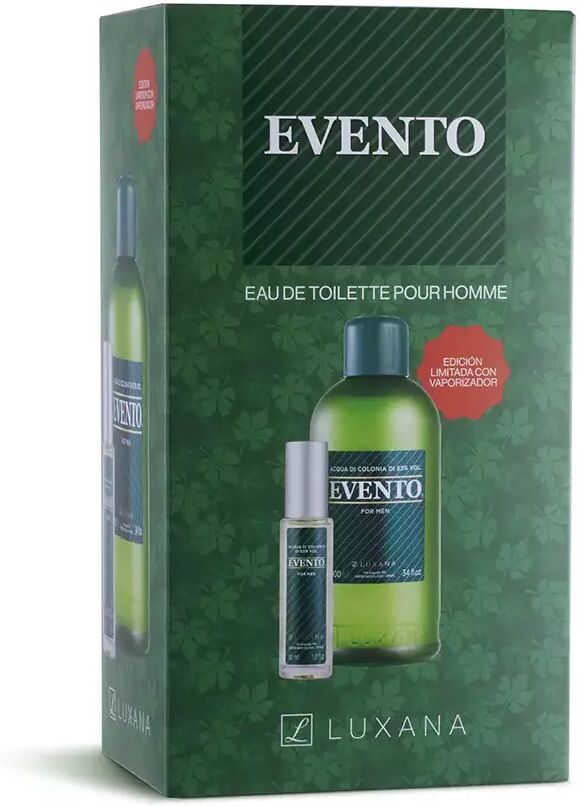
Luxana Event Case 2 PiecesHealth and Beauty Colonies Luxana Event Case 2 Pieces What is Luxana Evento 2-Piece Eau de Toilette Spray 1000 ml + Eau de Toilette Spray 30 ml Luxana Evento Case is an exclusive fragrance set that combines elegance and sophistication. It includes a 1000 ml Eau de Toilette spray for everyday use and a 30 ml Eau de Toilette spray , ideal for taking anywhere. This combination allows you to enjoy a long-lasting, fresh, and captivating aroma at any time of day. Perfect for those seeking a versatile fragrance with personality. Benefits - Provides a long-lasting and enveloping aroma that will accompany you throughout the day. - Available in two sizes: 1000 ml for home use and 30 ml for on the go. - Balanced formula that combines fresh, floral and woody notes. - Ideal for gifting on special occasions thanks to its elegant case. - Vaporizer that allows a uniform and comfortable application. Who is it for? Luxana Evento Case is perfect for those seeking a distinctive and elegant fragrance. Ideal for men and women who enjoy a refined, sophisticated, and long-lasting scent. It's also an excellent choice for those looking for a quality gift for family, friends, or loved ones, combining style and functionality. How to apply - Spray the Eau de Toilette at a distance of 15-20 cm from the body. - Apply to strategic points such as the wrists, neck, and behind the ears to enhance the scent's longevity. - Avoid rubbing your skin after application to keep the fragrance intact. - Use the 30ml version at any time of day to refresh your scent. Product use - Perfect for everyday use or special events. - Ideal to combine with your personal care routine. - Allows you to carry a distinctive scent both at home and on the go. - Suitable for all seasons thanks to its balanced composition. Buy Luxana Evento 2-Piece Eau de Toilette Spray 1000 ml + Eau de Toilette Spray 30 ml Don't wait any longer to enjoy the elegance and freshness of Luxana Evento. With its combination of fragrances in two sizes, you'll have the versatility and sophistication you're looking for. Add this exclusive case to your cart and experience a unique sensation of freshness and distinction with every application. Ideal for personal use or as a luxurious gift, Luxana Evento Case is the perfect choice for those who value quality and style in their fragrances.21,22 £*Shipping: 4,99 £Secure redirect to the provider
-
Uplift Curations VibeLink Adjustable Vibration Couple Bracelets Set Durable Woven Matching Wristbands For Him & Her VibeLink Adjustable Vibration Couple Bracelets Set Durable Woven Matching Wristbands For Him & HerStay connected wherever you are with this innovative couple bracelets set that blends stylish design with meaningful interaction. These adjustable vibration bracelets feature woven bands and responsive touchactivated vibration technology, letting...61,50 $*Shipping: 0,00 $Secure redirect to the provider
-
How does a nucleophilic substitution proceed?
A nucleophilic substitution proceeds with the attack of a nucleophile on an electrophilic carbon atom, leading to the displacement of a leaving group. The nucleophile, which is typically a negatively charged or electron-rich species, attacks the electrophilic carbon, forming a new bond and causing the leaving group to depart. This results in the substitution of the leaving group with the nucleophile, leading to the formation of a new compound. The rate and mechanism of the nucleophilic substitution can be influenced by factors such as the nature of the nucleophile, leaving group, and solvent. **
-
What is the Walden inversion in nucleophilic substitution?
The Walden inversion in nucleophilic substitution refers to the stereochemical outcome where the configuration of the stereocenter is inverted during the reaction. This inversion occurs due to the backside attack of the nucleophile on the electrophilic center, leading to the formation of the inverted product. The Walden inversion is a key concept in understanding the mechanism of nucleophilic substitution reactions, particularly in reactions involving chiral centers. **
-
How does the inductive mesomeric effect influence nucleophilic substitution?
The inductive mesomeric effect, also known as the resonance effect, involves the delocalization of electrons through a molecule. In the context of nucleophilic substitution, the inductive mesomeric effect can influence the reactivity of the substrate. When a substituent with a strong electron-withdrawing group is present, it can withdraw electron density from the carbon atom, making it more electrophilic and thus more susceptible to nucleophilic attack. Conversely, a substituent with a strong electron-donating group can donate electron density to the carbon atom, making it less electrophilic and less susceptible to nucleophilic attack. Therefore, the inductive mesomeric effect can impact the rate and outcome of nucleophilic substitution reactions. **
-
Is it an electrophilic addition or a nucleophilic addition?
The type of addition reaction depends on the nature of the reactants involved. If the reaction involves an electrophile (electron-deficient species) reacting with a nucleophile (electron-rich species), it is considered an electrophilic addition. On the other hand, if the reaction involves a nucleophile attacking an electrophilic center, it is considered a nucleophilic addition. The key distinction lies in the role of the reactants in the addition process. **
* All prices are inclusive of VAT and, if applicable, plus shipping costs. The offer information is based on the details provided by the respective shop and is updated through automated processes. Real-time updates do not occur, so deviations can occur in individual cases. ** Note: Parts of this content were created by AI.