Buy einlassbänder.eu ?
We are moving the project
einlassbänder.eu .
Are you interested in purchasing the domain
einlassbänder.eu ?
domain@kv-gmbh.de · 0541-91531010
Buy einlassbänder.eu ?
What is the difference between proportional and inverse proportional?
Proportional and inverse proportional relationships are two types of relationships between two variables. In a proportional relationship, as one variable increases, the other variable also increases at a constant rate. This means that the ratio between the two variables remains the same. In an inverse proportional relationship, as one variable increases, the other variable decreases at a constant rate. This means that the product of the two variables remains constant. **
How can one recognize proportional and inverse proportional relationships?
Proportional relationships can be recognized when two quantities increase or decrease at the same rate. This means that when one quantity doubles, the other quantity also doubles. Inverse proportional relationships, on the other hand, can be recognized when one quantity increases while the other decreases at a constant rate, or vice versa. This means that when one quantity doubles, the other quantity is halved. One can recognize these relationships by plotting the data on a graph and observing if the points form a straight line through the origin for proportional relationships, or if the points form a curve for inverse proportional relationships. **

Similar search terms for Non-proportional
Top-Angebote
Products related to Non-proportional:
-
Kodotan sofa Fiberglass Reinforced Single Side Ladder - Lightweight Non-Conductive Access Ladder 6 step BlueDurable Construction: Our Fiberglass Single-Sided Ladder is crafted from high-quality fiberglass, ensuring exceptional durability and longevity.206,49 $*Shipping: 0,00 $Secure redirect to the provider
-
Fusion Finds Waterproof Dog Car Seat Cover With Armrest Access Non Slip Pet Car Seat Protector For Cars, SUVs & Trucks Waterproof Dog Car Seat Cover With Armrest Access Non Slip Pet Car Seat Protector For Cars, SUVs & TrucksLet every road trip be cleaner, safer, and more comfortable for both you and your furry companion. This waterproof dog car seat cover protects your vehicle from muddy paws, pet hair, scratches, and everyday messes while giving your dog a cozy place...53,97 $*Shipping: 0,00 $Secure redirect to the provider
-
Inspired Deals 433MHz Wireless Garage Door Keypad With Rolling Code Security And Dual Channel PIN Access 433MHz Wireless Garage Door Keypad With Rolling Code Security And Dual Channel PIN AccessEnjoy the freedom to enter your garage without carrying a key or handheld remote. This garage door keypad provides convenient PINbased access with two independent password sets, making it practical for families, staff, or shared properties....64,97 $*Shipping: 0,00 $Secure redirect to the provider
-
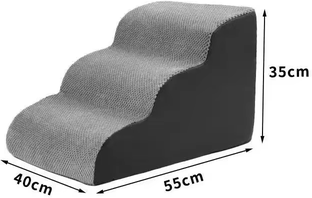
The Handy Homestead Washable Non Slip Memory Foam Dog Ramp & Pet Stairs For Easy Access 3 FloorsProvide your furry friends with the comfort and ease they deserve with our Washable Dog Ramp and NonSlip Pet Stairs. Designed for small to large dogs, this ramp offers a safe, soft, and supportive way for your pet to get up and down furniture, cars,...99,97 $*Shipping: 0,00 $Secure redirect to the provider



-
What is the difference between proportional relationships and inverse proportional relationships?
Proportional relationships are those in which the two variables increase or decrease at a constant rate. In other words, when one variable doubles, the other variable also doubles. In contrast, inverse proportional relationships are those in which one variable increases as the other decreases, and vice versa. In an inverse proportional relationship, the product of the two variables remains constant. In other words, when one variable doubles, the other variable is halved. **
-
What are proportional relationships?
Proportional relationships are relationships between two quantities where they change in a consistent manner. This means that as one quantity increases or decreases, the other quantity also increases or decreases in a predictable way. In a proportional relationship, the ratio between the two quantities remains constant. This can be represented by a straight line when graphed. **
-
Which of the relationships is inversely proportional and which is directly proportional?
The relationship between the distance traveled and the time taken is inversely proportional, as the faster you travel, the less time it takes to reach a destination. On the other hand, the relationship between the force applied and the acceleration produced is directly proportional, as increasing the force applied will result in a corresponding increase in acceleration. **
-
Which of the assignments is inversely proportional and which is directly proportional?
The assignment of distance traveled and time taken is inversely proportional, as the distance traveled decreases as the time taken increases. On the other hand, the assignment of force and acceleration is directly proportional, as the force increases, the acceleration also increases. **


How can I recognize if a function is proportional or inversely proportional?
You can recognize if a function is proportional by checking if the ratio of the output to the input is constant. In other words, if the function can be written in the form y = kx, where k is a constant, then the function is proportional. On the other hand, if the function can be written in the form y = k/x, where k is a constant, then the function is inversely proportional. Additionally, if the graph of the function is a straight line passing through the origin, it is proportional, while if the graph is a hyperbola, it is inversely proportional. **
How can one determine whether it is a proportional or inverse proportional relationship?
One can determine whether a relationship is proportional or inverse proportional by examining the pattern of the data points. In a proportional relationship, as one variable increases, the other variable also increases at a constant rate. This results in a straight line passing through the origin when the data is plotted on a graph. In an inverse proportional relationship, as one variable increases, the other variable decreases at a constant rate. This relationship is represented by a curve that approaches but never touches either axis when graphed. **
Top-Angebote
Products related to Non-proportional:
-
Uplift Essentials Smart WiFi Garage Door Controller Remote Access & Security Alarm Hub Smart WiFi Garage Door Controller Remote Access & Security Alarm HubUpgrade your home with the ultimate convenience of a smart garage door opener that puts complete control in the palm of your hand. This intelligent controller transforms your existing garage motor into a hightech security asset, allowing you to...84,97 $*Shipping: 0,00 $Secure redirect to the provider
-
Kodotan sofa Fiberglass Reinforced Single Side Ladder - Lightweight Non-Conductive Access Ladder 6 step BlueDurable Construction: Our Fiberglass Single-Sided Ladder is crafted from high-quality fiberglass, ensuring exceptional durability and longevity.206,49 $*Shipping: 0,00 $Secure redirect to the provider
-
Fusion Finds Waterproof Dog Car Seat Cover With Armrest Access Non Slip Pet Car Seat Protector For Cars, SUVs & Trucks Waterproof Dog Car Seat Cover With Armrest Access Non Slip Pet Car Seat Protector For Cars, SUVs & TrucksLet every road trip be cleaner, safer, and more comfortable for both you and your furry companion. This waterproof dog car seat cover protects your vehicle from muddy paws, pet hair, scratches, and everyday messes while giving your dog a cozy place...53,97 $*Shipping: 0,00 $Secure redirect to the provider
-
What is the difference between proportional and inverse proportional?
Proportional and inverse proportional relationships are two types of relationships between two variables. In a proportional relationship, as one variable increases, the other variable also increases at a constant rate. This means that the ratio between the two variables remains the same. In an inverse proportional relationship, as one variable increases, the other variable decreases at a constant rate. This means that the product of the two variables remains constant. **
-
How can one recognize proportional and inverse proportional relationships?
Proportional relationships can be recognized when two quantities increase or decrease at the same rate. This means that when one quantity doubles, the other quantity also doubles. Inverse proportional relationships, on the other hand, can be recognized when one quantity increases while the other decreases at a constant rate, or vice versa. This means that when one quantity doubles, the other quantity is halved. One can recognize these relationships by plotting the data on a graph and observing if the points form a straight line through the origin for proportional relationships, or if the points form a curve for inverse proportional relationships. **
-
What is the difference between proportional relationships and inverse proportional relationships?
Proportional relationships are those in which the two variables increase or decrease at a constant rate. In other words, when one variable doubles, the other variable also doubles. In contrast, inverse proportional relationships are those in which one variable increases as the other decreases, and vice versa. In an inverse proportional relationship, the product of the two variables remains constant. In other words, when one variable doubles, the other variable is halved. **
-
What are proportional relationships?
Proportional relationships are relationships between two quantities where they change in a consistent manner. This means that as one quantity increases or decreases, the other quantity also increases or decreases in a predictable way. In a proportional relationship, the ratio between the two quantities remains constant. This can be represented by a straight line when graphed. **
Similar search terms for Non-proportional
-
Inspired Deals 433MHz Wireless Garage Door Keypad With Rolling Code Security And Dual Channel PIN Access 433MHz Wireless Garage Door Keypad With Rolling Code Security And Dual Channel PIN AccessEnjoy the freedom to enter your garage without carrying a key or handheld remote. This garage door keypad provides convenient PINbased access with two independent password sets, making it practical for families, staff, or shared properties....64,97 $*Shipping: 0,00 $Secure redirect to the provider
-
The Handy Homestead Washable Non Slip Memory Foam Dog Ramp & Pet Stairs For Easy Access 3 FloorsProvide your furry friends with the comfort and ease they deserve with our Washable Dog Ramp and NonSlip Pet Stairs. Designed for small to large dogs, this ramp offers a safe, soft, and supportive way for your pet to get up and down furniture, cars,...99,97 $*Shipping: 0,00 $Secure redirect to the provider
-
Which of the relationships is inversely proportional and which is directly proportional?
The relationship between the distance traveled and the time taken is inversely proportional, as the faster you travel, the less time it takes to reach a destination. On the other hand, the relationship between the force applied and the acceleration produced is directly proportional, as increasing the force applied will result in a corresponding increase in acceleration. **
-
Which of the assignments is inversely proportional and which is directly proportional?
The assignment of distance traveled and time taken is inversely proportional, as the distance traveled decreases as the time taken increases. On the other hand, the assignment of force and acceleration is directly proportional, as the force increases, the acceleration also increases. **
-
How can I recognize if a function is proportional or inversely proportional?
You can recognize if a function is proportional by checking if the ratio of the output to the input is constant. In other words, if the function can be written in the form y = kx, where k is a constant, then the function is proportional. On the other hand, if the function can be written in the form y = k/x, where k is a constant, then the function is inversely proportional. Additionally, if the graph of the function is a straight line passing through the origin, it is proportional, while if the graph is a hyperbola, it is inversely proportional. **
-
How can one determine whether it is a proportional or inverse proportional relationship?
One can determine whether a relationship is proportional or inverse proportional by examining the pattern of the data points. In a proportional relationship, as one variable increases, the other variable also increases at a constant rate. This results in a straight line passing through the origin when the data is plotted on a graph. In an inverse proportional relationship, as one variable increases, the other variable decreases at a constant rate. This relationship is represented by a curve that approaches but never touches either axis when graphed. **
* All prices are inclusive of VAT and, if applicable, plus shipping costs. The offer information is based on the details provided by the respective shop and is updated through automated processes. Real-time updates do not occur, so deviations can occur in individual cases. ** Note: Parts of this content were created by AI.